Header

Search

Podcast «Fokus: Strafrecht»

Digitalisation, climate change, social upheaval: in the podcast "Fokus: Strafrecht", we discuss current challenges and their significance for Swiss criminal law with experts from the legal profession and other disciplines.

Season 1 is dedicated to questions surrounding digitalisation and AI: how is artificial intelligence changing our legal system? Will it soon be passing court judgements? How reliable is it in assessing the risk posed by criminals? What do tomorrow's lawyers and solicitors need to know about AI? What is identity theft? And much more...

"Fokus: Strafrecht" offers exciting insights every two weeks, for professionals and those who want to become professionals. Subscribe now on your podcast platform. We look forward to hearing from you.

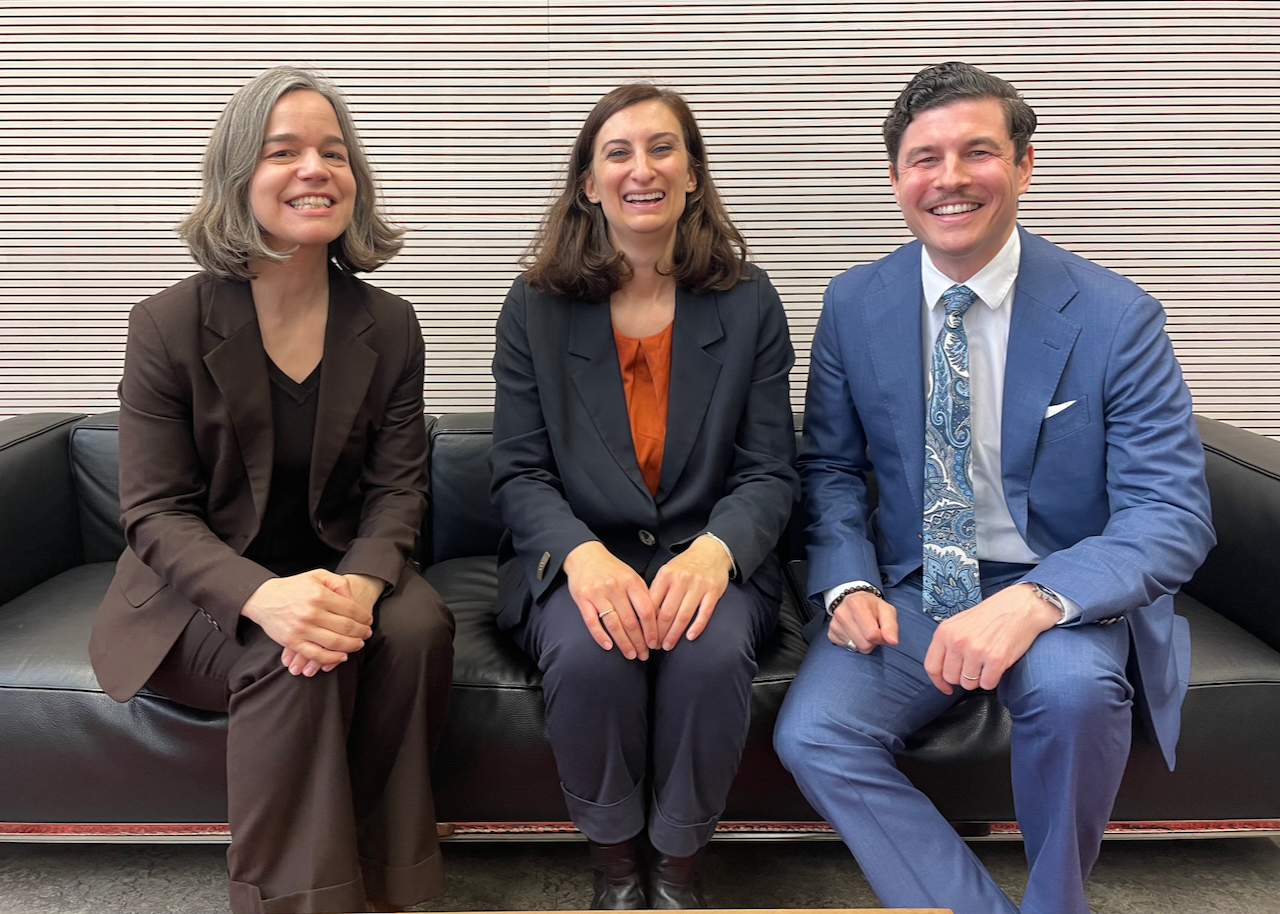
HostsProf. Dr. Nadine Zurkinden, Assistent Professor at the University of Zurich andRechtsanwalt Dr. Claude Eric Bertschinger, Lecturer at Zürcher Hochschule für Angewandte Wissenschaften ZHAW.

Production: Wilma Rall

Contactfokus.strafrecht@ius.uzh.ch

Season 1: AI, digitalisation and the future of law

AI, law and ethics

Humans and artificial intelligence deal with legal issues in very different ways. AI can access huge amounts of relevant data extremely quickly, but generally has little contextual knowledge about how the state, institutions and legal systems work, or the philosophical principles underlying them. 
How do large language models such as ChatGPT deal with legal issues, depending on the data material and prompts? How does AI respond to moral dilemmas? And are AI judgements actually more transparent than those made by judges?  
We discuss this with Yoan Hermstrüwer, Professor of Legal Tech, Law and Economics and Public Law at the University of Zurich. He is an expert in legal data science, i.e. the application of data science methods in law. 

EP5 – Crypto boom and law enforcement

Criminals are also taking advantage of the boom in cryptocurrencies such as Bitcoin and Ethereum. Prosecuting such crimes poses major challenges for law enforcement agencies. On the one hand, cryptocurrencies, which are mostly blockchain-based and pseudo-anonymous, are stored in a decentralised manner. This means that they are not controlled by any central institution (e.g. a bank). Furthermore, they exist exclusively in virtual form and are not tied to any specific location.
This means that both the conventional determination of the place of success and the classic principle of territoriality reach their limits here. Despite recommendations from the Financial Action Task Force (FATF) and the International Cybercrime Convention, which, among other things, facilitates international cooperation in the prosecution of cybercrime, transnational prosecution remains fraught with obstacles. 
We talk to Lea Bachmann about the crimes committed with and around cryptocurrencies and the adjustments that would be possible and necessary in criminal law, particularly in international legal assistance. Together with Sabine Gless, she has written a book chapter on the subject (Sabine Gless/Lea Bachmann, § 21 Internationales Strafrecht, in: Zellweger-Gutknecht, Corinne; Tschudi, Dominik; MacCabe, Kevin, Kryptowerte, Basel 2024). Lea Bachmann is a doctoral candidate at the University of Basel. In her SNF-funded dissertation, she is investigating the limits of criminal liability when using AI systems in companies, using the example of money laundering prevention. 

EP4 - Traffic accident prevention: Digital traces & crash tests

Modern vehicles cause far more than just damage to bodywork in accidents. With sensors and systems now recording every movement, the question arises as to what role digital data plays today in the analysis of traffic accidents and how it can help prevent such accidents in the future.  
Crash test dummies, on the other hand, provide important physical data on the risk of injury in collisions by simulating the movements of the human body. 
How are accidents reconstructed and how is this changing with increasing vehicle automation? What can we learn from this for the prevention of traffic accidents in order to move closer to ‘Vision Zero’? We discuss this with Bettina Zahnd, road safety expert at EBP.

EP3 - AI in court

Anyone who disagrees with the AI ruling must justify their position. AI is already widely used in the justice system in China. In many other countries, too, it is finding its way into the work of courts, law enforcement agencies and lawyers, whether in case allocation, research for the reasoning behind judgements, the reasoning itself, or even as a tool for sentencing. Where and how can, may and should AI be used? What risks do AI tools pose, particularly for fundamental rights and the rule of law? 
We talk toProf. Vanessa Franssen, a specialist in cybercrime at the University of Liège in Belgium, about the advantages and possible applications, as well as the limitations and risks of AI in court practice.
The conversation will be held in English.

EP2 - Identity theft

The socio-political debate surrounding deep fakes and identity theft has not gone unnoticed by Swiss lawmakers. Since autumn 2023, the new criminal offence of identity theft has been enshrined in the Criminal Code. Legal scholars are critical of this move due to many ambiguities: Under what circumstances will I be liable to prosecution in future? If I use the name, image or voice of other people? If I do so as a joke or with fraudulent intent? And last but not least: is this offence even necessary? We discuss this withGian Ege, Assistant Professor of Criminal law and Criminal procedure at the University of Zurich, using the case of Sibel Arslan/Andreas Glarner as an example.

EP1 - Automated driving: From driver to passenger

Can I let the autopilot take over on the motorway and write a text message? Driver assistance systems are rapidly gaining ground and revolutionising driving. In some US states, self-driving cars, known as robotaxis, are already permitted. Here in this country, this will probably take some time yet. However, increasing automation is already raising many legal questions. What is permitted and what is not? Who decides on approval? And who is liable in the event of traffic accidents – the driver, the manufacturer or the supplier? In her postdoctoral thesis, Prof. Dr. Nadine Zurkinden takes an in-depth look at the stages of vehicle automation and permissible risk. In conversation with Dr. Claude Eric Bertschinger, she provides insight into the world of assisted driving.

EP0 - The hosts: "Who are we...?"

Our own experiment at the start of "Fokus: Strafrecht" shows that large language models such as ChatGPT sometimes hallucinate. Prof. Dr. Nadine Zurkinden and Dr. Claude Eric Bertschinger check their tracks on the internet, chat about their motivation for podcasting and give you a first glimpse into the first season.